|
Weakening of empathy, kindness, and the sense of humanity
What happened and how did it happen?
A Thousand new modular homes for the homeless by 2030
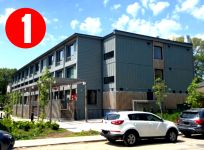
First Modular Housing
11 Macey Ave.
56 Residential Units Cost: $190,000/unit
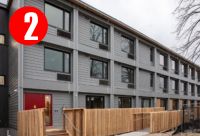
Second Modular Housing 321 Dovercourt Rd.
44 Residential Units Cost: $190,000/unit
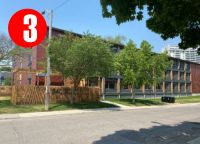
Third Modular Home
540 Cedarvale
59 Residential Units Cost: $260,000/unit
Fourth Modular Home
39 Dundalk Street
57 Residential Units
Cost: $384,000/unit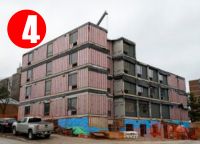
A total of 250 pre-built residential units
Initial cost estimate was $47.5 M
federal government funded $18.75 M and
City funded remainder $28.75
|
While various factors contribute to the worsening
homelessness crisis today, one of the factors that needs to
ring alarm bells is the weakening of empathy, kindness, and
the sense of humanity. Nowadays, we can see its effects
everywhere.
As one of those
people who fight against homelessness emphasizes,
we should not delay addressing the housing problem for those
struggling with addiction and mental illnesses by waiting
for their treatment. According to him, we must silence a
part of our humanity to continue passing beside another
human being facing such difficult circumstances.
I do not intend to delve into the reasons in this series of
three articles. Over the past three years, both supporters
and opponents in Willowdale have voiced their opinions on
the modular housing project at 175 Cummer Avenue, taking
actions to either support or oppose it. My aim is simply to
describe what transpired, as it may serve as a reflection of
our values, democracy, justice, humanitarianism, and civic
duties.
In order to gain a better understanding of the impact on
the surroundings, I deemed it essential to visit four out of
five projects that have already been constructed and are
currently in use. These projects consist of a total of 275
prefabricated units, all of which were approved by the
Toronto City Council in 2020.
The City of Toronto has laid out plans to address the
issue of homelessness by replacing temporary shelters with
well-built units, catering to the housing and support
service needs of individuals in need. The City plans
to build
1000 of those units by the year 2030.
In terms of
design and materials, these modular units are different from
their neighbouring buildings, but they're not intrusive. You
can pass them without noticing their appearance or
functionality. Two residents from the neighbourhood where
the first project was built and has been in use for three
years said they hadn't noticed anything unpleasant.
Regarding safety, one of the two women I talked to
said that every day, she passes in front of this building on
foot to
go to
work, and she has never encountered any unpleasant
incident.
The 56-unit located at
11 Macey Avenue in Scarborough, approved by the city
council and built in December 2020 using a Ministerial
Zoning Order
(MZO) to expedite such projects, was operational at the
lowest cost and at the highest speed compared to the other
three projects.
This modular housing is operated by a
charitable
organization with a 100-year+ history serving Toronto
neighbourhoods, specialized in owning and operating
high-quality affordable and supportive rental housing. This
social agency provides services to over forty thousand
low-income individuals and families in thirty locations
across Toronto every year, addressing the most sensitive
community issues such as poverty, homelessness, mental
health, unemployment, social isolation, addiction, conflict
resolution, violence, youth alienation, and housing through
free
programs and services.
Another reputable non-profit
organization with 45
years of experience serving and supporting individuals with
mental health issues collaborates in operating this
community.
The construction of the second compound, with 44
residential units at
321 Dovercourt Rd., was also completed in five months,
and it became operational in January 2021. This compound is
also operated by the same two non for profit organizations.
One of the people whose residence is in front of this
compound told me about the neighbourhood opposition to this
project, which caused them to lose a large free parking lot.
Contrary to their previous expectations, she was surprised
by how people living in that building could be so quiet.
Occasionally, in the summer, she could see some elderly
sitting in their wheelchairs in front of the building,
conversing with each other.
It is worth mentioning that the Ministerial Zoning Order for
the construction of these two first compounds was issued
within one
week, while for the other two compounds, was
issued within six and twelve weeks, respectively.
Due
to opposition from MPP
Stan Cho, the Ministerial Zoning Order for the Cummer
modular housing was not
issued, and the city had to go through a regular
rezoning of the site in March 2023, which was approved by
the City Council in July of the same year.
The local association Bayview/Cummer, the developer LiVante
and the neighbourhood group Voices of Willowdale objected to
it in the Ontario Land
Tribunal, and eventually, their objection was
rejected by the
court on January 2nd of this year.
The
third
compound, located at 540 Cedarvale Ave. with 59 residential
units, became operational in November 2022 after thirteen
months of construction. Similar to the other two
communities, it harmonizes well with its surroundings. Due
to various reasons, including inflation and the increased
cost of construction materials, the cost per unit in this
compound is significantly higher, reaching around $260,000,
compared to the other two buildings where it was $190,000
per unit.
The operation of this compound is entrusted to another
reputable non-profit
organization
with an 85-year history of providing physical and mental
health services, affordable housing, employment support,
financial counselling, child care, programs for the elderly,
and youth services to approximately
37,000
residents of Toronto, newcomers, seniors, children, and
youth annually, with the help of 854 staff and 724
volunteers.
A resident living near this modular housing expresses
satisfaction with initiatives aimed at assisting those in
need, despite the associated challenges. He finds the
behaviours of a few residents in the compound, who are
dealing with mental health issues, tolerable. This is
particularly true given the building's proximity to a police
station, which has alleviated any safety concerns.
The only five-story modular housing building with 47
residential units located on
Dundalk
Street among taller buildings make it blend well in the
neighbourhood.. More floors and other factors have caused
the construction cost per unit of this building to increase
to around $350,000.
In the initial estimate, the construction cost of 250 units
was estimated at $47.50 million, with the federal government
covering $18.75 million, and the remaining $28.75 million
dollars being accepted by the city.
It was windy, snowy and too cold to find anyone out of their
homes to have a conversation with about the last modular
housing.
Triumph
of Justice Over Politics (Part 1)
|
.jpg)